
April 2026
UK businesses need to prepare for a significant increase in electricity costs from 1 April 2026, as major changes to network charges come into effect. Many medium-sized energy users could see annual bill increases of around £75,000, with costs continuing to rise over the coming years.
At the centre of this shift is a sharp increase in Transmission Network Use of System (TNUoS) Demand Residual (TDR) charges—part of the framework that funds investment in the UK’s electricity infrastructure and supports the transition to a low-carbon energy system.
The hidden impact of capacity “banding”
A key issue is how these charges are calculated. TDR costs are determined by a site’s grid supply capacity “banding”—a classification that many organisations may not fully understand or actively manage.
Crucially, these bands are now locked in for the full five-year price control period. In practice, this means businesses are tied to a fixed charging structure until April 2031, based on their grid capacity as it stood in January 2024.
The only way to adjust this banding during the period is through a significant reduction in contracted capacity—requiring a business to give up more than 50% of its grid supply.
A system that may discourage flexibility
TNUoS-related costs are essential to fund the infrastructure upgrades needed for the energy transition. However, these increases are arriving at a time when many organisations are already under pressure from high energy costs and ongoing market uncertainty.
In our view, the current structure risks driving over-investment in new network capacity while existing capacity remains underutilised, ultimately pushing standing charges higher than they need to be.
There is also a missed opportunity to recognise the system-wide benefits of businesses investing in on-site renewable generation and energy storage. By reducing reliance on the grid, these solutions can help free up capacity for others—particularly those struggling to secure new or expanded connections.
Why efficiency alone is no longer enough
Many organisations have responded to high energy prices by improving efficiency and reducing consumption. While important, this approach does little to address rising fixed grid costs.
Reducing usage won’t mitigate the increasing cost of grid supply. Instead, businesses need to think more strategically about how they manage their overall electricity demand and dependence on the grid.
The growing case for on-site energy
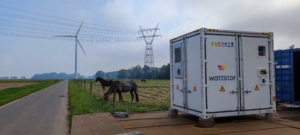
As fixed charges rise and become locked in for extended periods, the case for on-site renewable generation and energy storage is becoming increasingly compelling.
By generating power locally and using battery storage to manage demand, businesses can:
- Reduce reliance on grid supply
- Lower exposure to rising network charges
- Optimise contracted capacity over time
- Improve long-term cost certainty
This is particularly relevant for sites with variable or peak-heavy demand profiles, such as manufacturing facilities, logistics hubs, stadiums, and event venues.
A narrowing window to act
There is still time to respond—but the window is closing.
Deploying on-site generation and storage over the next two years could allow some organisations to reduce their contracted capacity before the next banding lock-in. Without action, businesses risk being tied into higher cost structures for another full five-year cycle beyond 2031.
If the current rules remain unchanged, it will be critical to have the right on-site generation and optimal grid capacity in place by the end of 2028. Otherwise, TDR charge bands could be locked in again for a further five years.
Taking control of energy costs
Now is the time to review current capacity commitments and assess future exposure to rising network charges.
By analysing site consumption patterns and understanding how on-site generation and storage can supplement grid supply, it’s possible to identify opportunities to reduce both variable and fixed electricity costs—and take greater control over long-term energy spend.
We help commercial customers save money on their electricity over the long term through Price Protect. We design, build, operate and the optimise a renewable system on your premises, providing you with renewable electricity at a cost significantly below the wholesale market price.
Email our team or book a call to find out more.
Know someone who'd be interested in this? Why not share it: